कोकिल वीणा का परिवर्तित रूप और विशिष्ट ध्वनि
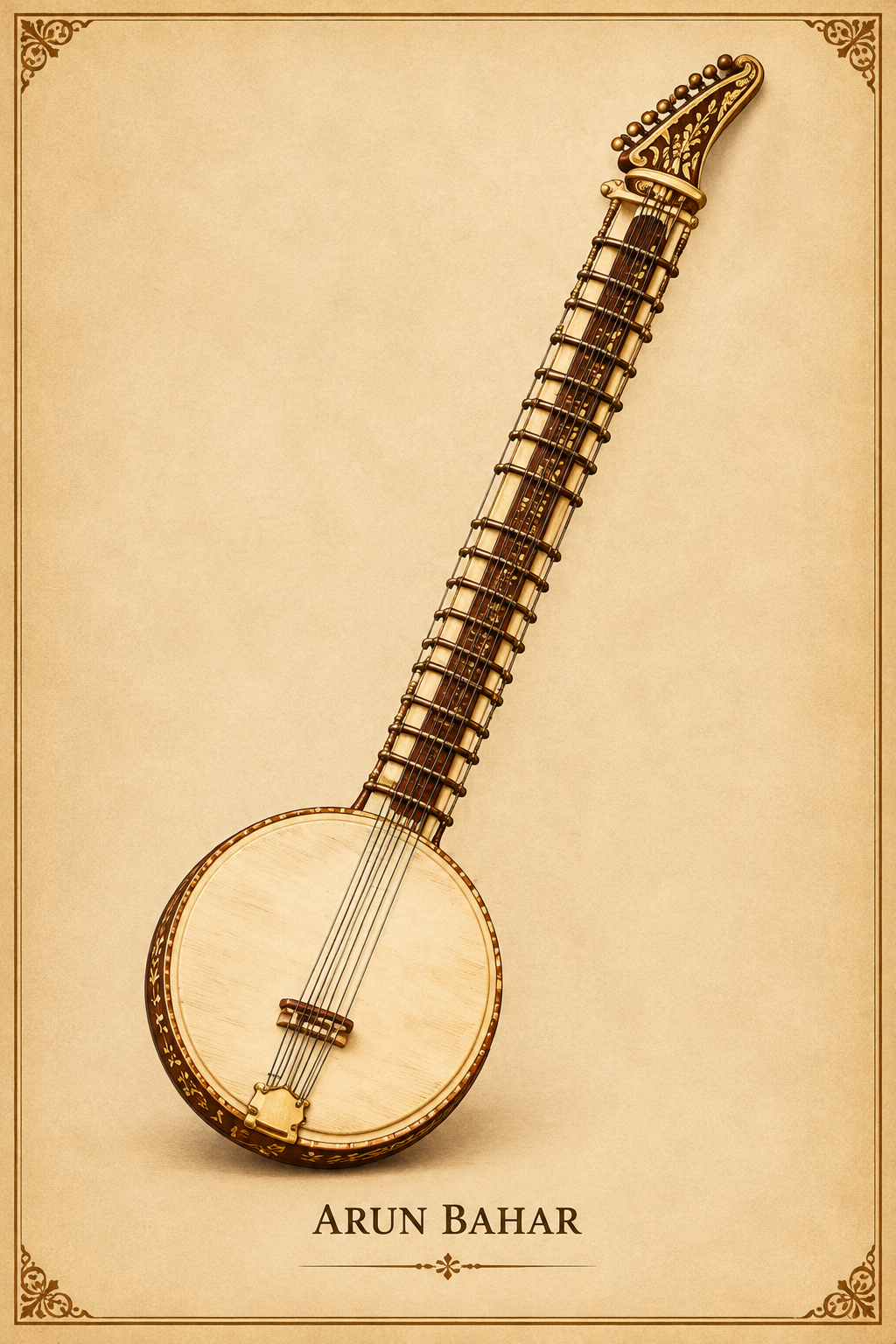
अरुण बहार भारतीय तन्त्री-वाद्यों में कोकिल वीणा का एक संशोधित रूप है। इसकी बाहरी बनावट कोकिल वीणा से मिलती-जुलती है, किन्तु अनुनादक की संरचना में एक विशेष अन्तर मिलता है। इस वाद्य में अनुनादक पर लगा चमड़ा सामने की ओर स्थित होता है।
अरुण बहार का वादन सितार के समान किया जाता है, किन्तु इसकी ध्वनि सितार से भिन्न बताई गई है। उपलब्ध विवरण के अनुसार इसका स्वर बैंजो अथवा सरोद की अपेक्षा अधिक मधुर होता है।
अरुण बहार की विशिष्ट पहचान कोकिल वीणा से इसकी संरचनात्मक समानता, अनुनादक पर चमड़े की स्थिति तथा सितार-सदृश वादन-विधि में निहित है। यह वाद्य मूल स्वरूप में परिवर्तन के माध्यम से भिन्न ध्वनि उत्पन्न करने का एक उल्लेखनीय उदाहरण प्रस्तुत करता है।
प्रमुख स्रोत: Heritage of Musical Instruments, Department of Museums, Gujarat.
Arun Bahar
A Modified Form of the Kokil Veena with Distinctive Tonal Qualities
The Arun Bahar is a modified form of the Kokil Veena, retaining a similar outward appearance while incorporating a distinctive structural variation. Unlike the Kokil Veena, the leather covering of its resonator is positioned on the front side of the instrument.
The Arun Bahar is played in a manner similar to the sitar, although its sound is described as different. According to the available account, its tone is considered sweeter than that of the banjo or sarod.
The distinctive identity of the Arun Bahar lies in its structural relationship with the Kokil Veena, the frontal placement of leather on its resonator and its sitar-like playing technique. It represents an example of how modifications to an existing instrumental form can produce a different tonal character.
Principal source: Heritage of Musical Instruments, Department of Museums, Gujarat.