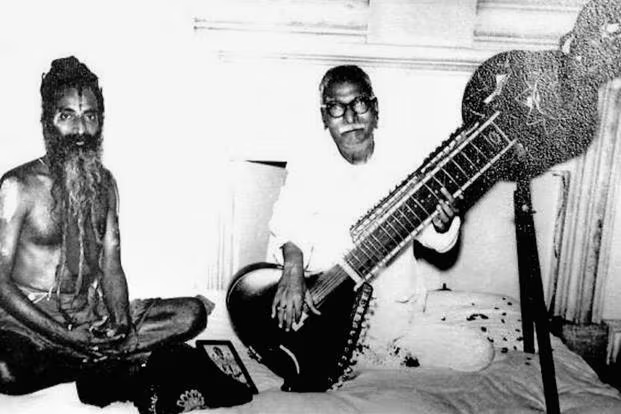
स्वामी दत्तात्रेय पर्वतीकर की नादयोग साधना और वाद्य-निर्माण का नवाचार
दत्तात्रेय वीणा भारतीय तन्त्री-वाद्यों की परम्परा में एक विशिष्ट वाद्य है, जिसका निर्माण स्वामी दत्तात्रेय रामाराव पर्वतीकर (१९१६–१९९०) ने किया था। नादयोग के साधक स्वामी पर्वतीकर सितार, विचित्र वीणा, रुद्रवीणा तथा स्वरमण्डल के कुशल वादक थे। वीणा-वादन में उनकी विशेष दक्षता और आध्यात्मिक साधना के कारण उनके अनुयायी उन्हें स्नेहपूर्वक ‘वीणा बाबा’ कहते थे।
स्वामी पर्वतीकर ने संगीत को आध्यात्मिक अनुभूति और साधना के प्रसार का माध्यम बनाया। उन्होंने भारत के विभिन्न स्थानों पर अनेक संगीत-प्रस्तुतियाँ दीं। उनकी वादन-परम्परा में नादयोग का विशेष स्थान था, जिसके अन्तर्गत संगीत और आध्यात्मिक साधना का समन्वय उनके जीवन तथा सांगीतिक अभिव्यक्ति का प्रमुख आधार रहा।
दत्तात्रेय वीणा का विकास स्वामी पर्वतीकर द्वारा विभिन्न भारतीय तन्त्री-वाद्यों की संरचनात्मक विशेषताओं को एक साथ लाने के प्रयास से हुआ। उन्होंने रुद्रवीणा में सितार, विचित्र वीणा और स्वरमण्डल के तत्त्वों का समावेश करके इस नवीन वाद्य की रचना की। इस वाद्य को उन्होंने ‘ब्रह्म वीणा’ भी कहा।
इस वीणा की एक उल्लेखनीय विशेषता इसके निचले भाग में लगाई गई अतिरिक्त तन्त्रियाँ थीं, जिनकी व्यवस्था हार्प के समान बताई गई है। उपलब्ध विवरण के अनुसार स्वामी पर्वतीकर ने स्वयं इसके निर्माण में सहयोग किया तथा अतिरिक्त तन्त्रियाँ लगवाने में भूमिका निभाई। इन संरचनात्मक परिवर्तनों से वाद्य को एक विशिष्ट ध्वनि-स्वरूप प्राप्त हुआ, जिसे समकालीन विवरण में रहस्यमय और आध्यात्मिक अनुभूति उत्पन्न करने वाला बताया गया है।
बद्रीनाथ धाम में स्वामी पर्वतीकर द्वारा ब्रह्म वीणा का वादन किए जाने का भी उल्लेख मिलता है। वे बद्रीनाथ मन्दिर में अधिष्ठित देवता के निवास की सम्पूर्ण वार्षिक अवधि के दौरान वहाँ रहते थे। उपलब्ध विवरण में स्वामी पर्वतीकर द्वारा यह कहा जाना भी दर्ज है कि उस समय इस प्रकार की केवल एक ही वीणा अस्तित्व में बची थी।
दत्तात्रेय वीणा का ऐतिहासिक महत्त्व उसके विशिष्ट निर्माण और नादयोग की साधना से सम्बन्ध में निहित है। रुद्रवीणा के साथ सितार, विचित्र वीणा और स्वरमण्डल की विशेषताओं का समन्वय तथा हार्प-सदृश अतिरिक्त तन्त्रियों का प्रयोग इसे एक स्वतंत्र पहचान प्रदान करते हैं। यह वाद्य भारतीय संगीत की उस परम्परा का महत्त्वपूर्ण उदाहरण है, जिसमें कलाकार अपनी साधना, सांगीतिक अनुभव और ध्वनि-सम्बन्धी आवश्यकताओं के अनुरूप नए वाद्यों का विकास करते रहे हैं।
प्रमुख स्रोत: HCMAE, फ़ेसबुक पर प्रकाशित स्वामी दत्तात्रेय रामाराव पर्वतीकर और उनकी ब्रह्म वीणा सम्बन्धी विवरणात्मक सामग्री।
Dattatreya Veena (Brahm Vina)
Swami Dattatreya Parvatikar’s Nada Yoga Tradition and Instrumental Innovation
The Dattatreya Veena is a distinctive instrument in the Indian stringed-instrument tradition, created by Swami Dattatreya Rama Rao Parvatikar (1916–1990). An exponent of Nada Yoga, Swami Parvatikar was accomplished in playing the sitar, Vichitra Veena, Rudra Veena and Swarmandal. His exceptional command of Veena performance earned him the affectionate title Veena Baba among his spiritual followers.
Swami Parvatikar regarded music as a medium for spiritual practice and expression. He gave numerous musical performances across India, seeking to communicate spirituality through sound. Nada Yoga occupied a central position in his musical life, bringing together instrumental performance and spiritual discipline.
The Dattatreya Veena emerged from Swami Parvatikar’s attempt to combine the structural and musical characteristics of different Indian stringed instruments. He incorporated elements of the sitar, Vichitra Veena and Swarmandal into the Rudra Veena, creating a new instrumental form. He also referred to this instrument as the Brahm Vina.
One of its distinctive constructional features was the addition of several strings along the lower portion of the instrument, arranged in a manner resembling a harp. According to the available account, Swami Parvatikar personally participated in its construction and assisted in having these additional strings fitted. The resulting instrument was described as possessing an unusual and deeply evocative sound, regarded by listeners as having a mystical quality.
An important reference to the Brahm Vina concerns Swami Parvatikar’s performances at the Badrinath Temple. He was known to remain at Badrinath throughout the annual period during which the presiding deity resided at the shrine. The account also records his statement that the instrument he played was the only surviving example of its kind at that time.
The historical significance of the Dattatreya Veena lies in its distinctive construction and close association with the practice of Nada Yoga. By combining elements of the Rudra Veena, sitar, Vichitra Veena and Swarmandal, and introducing additional harp-like strings, Swami Parvatikar developed an instrument reflecting his individual musical and spiritual approach. The Dattatreya Veena thus represents an important example of innovation within the Indian stringed-instrument tradition, where instrumental design evolved in response to the artistic and spiritual pursuits of the musician.
Principal source: HCMAE, descriptive material published on Facebook concerning Swami Dattatreya Rama Rao Parvatikar and his Brahm Vina.