काष्ठनिर्मित संरचना और गम्भीर ध्वनि की विशेषता
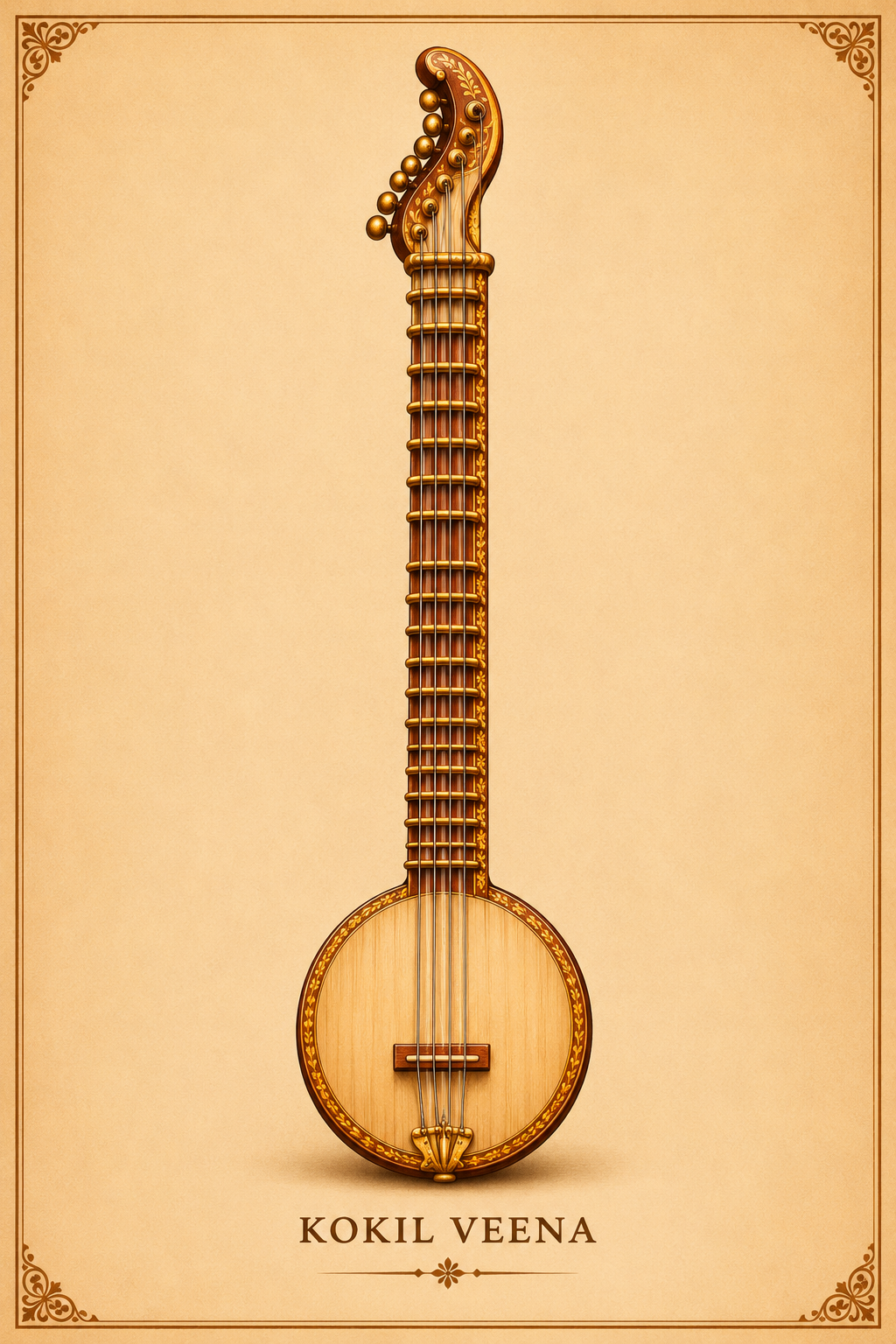
कोकिल वीणा भारतीय तन्त्री-वाद्यों में सितार का एक काष्ठनिर्मित रूप है। यह वाद्य विशेष रूप से उन कलाकारों के लिए उपयुक्त बताया गया है, जिन्होंने कानन वाद्य का अभ्यास किया हो और अपनी वादन-दक्षता को आगे विकसित करना चाहते हों।
कोकिल वीणा की प्रमुख संरचनात्मक विशेषता इसके अनुनादक के पिछले भाग में लगा चमड़ा है। इस विशेष व्यवस्था के कारण इसकी ध्वनि कानन की अपेक्षा अधिक गम्भीर बताई गई है।
कोकिल वीणा की विशिष्ट पहचान इसकी लकड़ी से निर्मित संरचना, कानन के अभ्यास से आगे बढ़ने की सम्भावना तथा अधिक गम्भीर ध्वनि में निहित है। यह वाद्य तन्त्री-वाद्यों में संरचनात्मक परिवर्तन और ध्वनि-सम्बन्धी विविधता का एक उल्लेखनीय उदाहरण प्रस्तुत करता है।
प्रमुख स्रोत: Heritage of Musical Instruments, Department of Museums, Gujarat.
Kokil Veena
Wooden Construction and Deeper Tonal Character
The Kokil Veena is a wooden form of the sitar, distinguished by its construction and tonal characteristics. It is described as an instrument through which musicians who have already practised the Kanan can further develop their playing skills.
The principal structural feature of the Kokil Veena is the leather covering positioned at the back of its resonator. This arrangement gives the instrument a deeper sound than that of the Kanan.
The distinctive identity of the Kokil Veena lies in its wooden construction, its role in the further development of skills acquired through Kanan practice, and its comparatively deeper tonal quality. It represents an example of structural variation and tonal diversity within the Indian stringed-instrument tradition.
Principal source: Heritage of Musical Instruments, Department of Museums, Gujarat.